"Use a strong password" is advice everyone's heard and almost nobody consistently follows — because most strong-password advice produces something like xK9#mQ2!vL, which is secure and also completely unmemorable. Here's a more practical way to think about it.
What Actually Makes a Password Strong
Password strength mostly comes down to length and unpredictability — not complexity for its own sake. A 16-character password of random words is generally harder to crack than an 8-character password crammed with symbols, and far easier to type and remember.
The Fastest Way to Get One
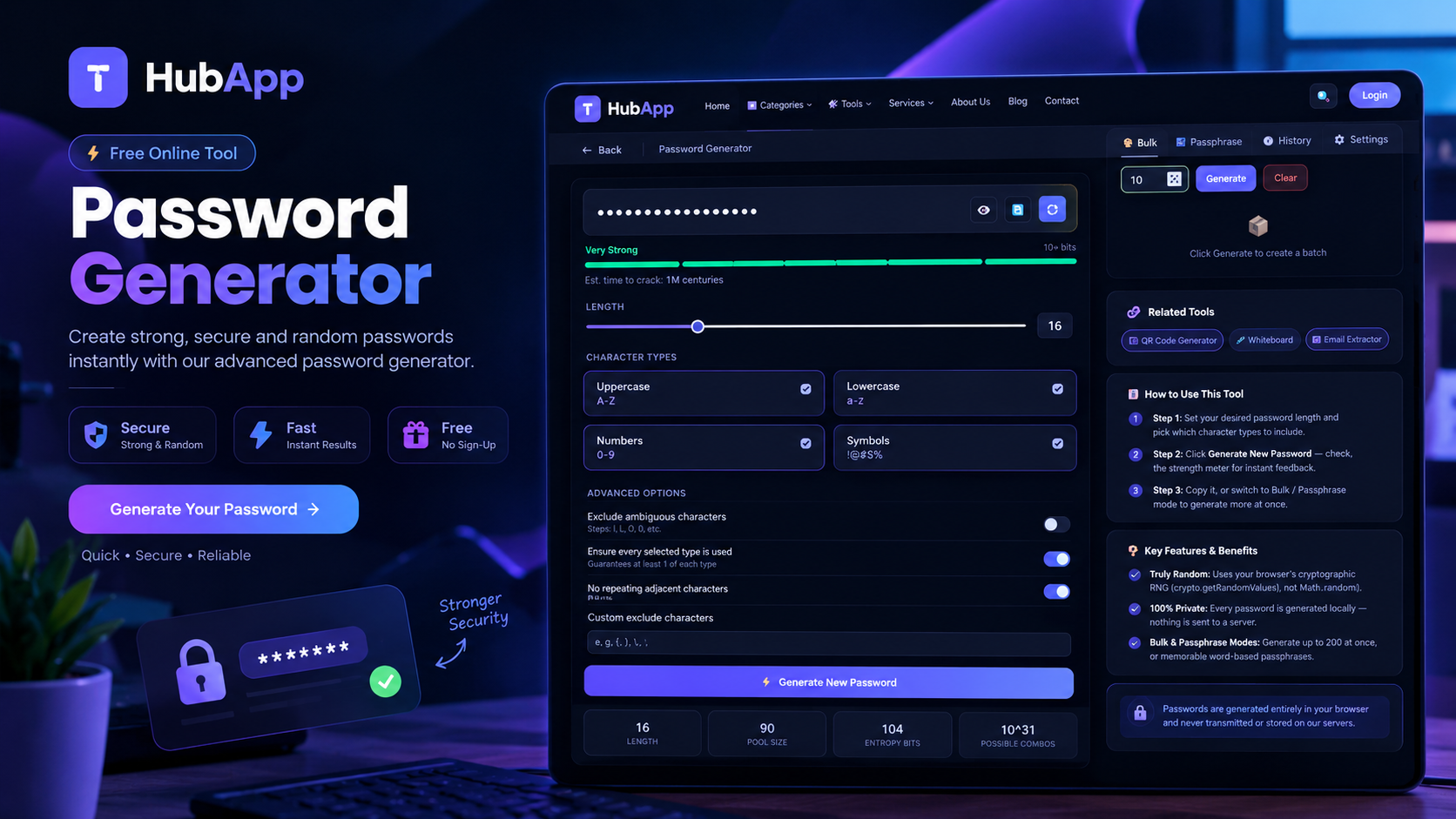
For accounts where you'll rely on a password manager or don't need to memorize it (most accounts, honestly), the Password Generator creates a strong, random password instantly — set the length and character types you need and copy it straight into the signup form.
For Passwords You Actually Need to Remember
For your password manager's master password, or your device unlock code, use a passphrase instead — four or five unrelated words strung together, like correct-horse-battery-lamp. It's long enough to be very strong, and far easier to recall than a random string, because you're remembering words, not characters.
Habits That Matter More Than Password Complexity
- Never reuse passwords across sites. If one site gets breached (and breaches happen to big, reputable companies too), reused passwords mean every other account using that password is now exposed.
- Use a password manager. This is really the whole trick — you only need to remember one strong master password, and the manager generates and stores a unique strong password for everything else.
- Turn on two-factor authentication wherever it's offered, especially for email, banking, and any account tied to password recovery for other accounts.
- Change a password immediately if a service you use announces a data breach — don't wait.
FAQ
How long should a password be?
12 characters is a reasonable minimum today; 16+ is comfortably strong for most accounts.
Are password managers safe to use?
Yes — reputable password managers encrypt your data, and the risk of a single reused weak password across many sites is generally far higher than the risk of using a password manager.
Do I need symbols and numbers in every password?
Not if the password is long enough — length contributes more to strength than symbol variety, though many sites still require a mix, so the generator lets you turn those on when a site demands it.