Recruiters spend an average of just a few seconds on a first pass of any CV, and before a human even sees it, many CVs are filtered by an Applicant Tracking System (ATS) that scans for keywords and structure. A CV that's well-written but poorly structured can get rejected before a person ever reads it.
Structure That Actually Works
- Contact info at the top — name, phone, email, city (full address isn't necessary), and a LinkedIn/portfolio link if relevant
- A short summary (2-3 lines) stating your role, years of experience, and your strongest relevant skill — not a generic objective statement
- Work experience in reverse chronological order, each with 3-5 bullet points focused on results, not just duties
- Skills section matching the language used in the job posting itself
- Education, kept brief unless you're an early-career applicant
Build One in Minutes
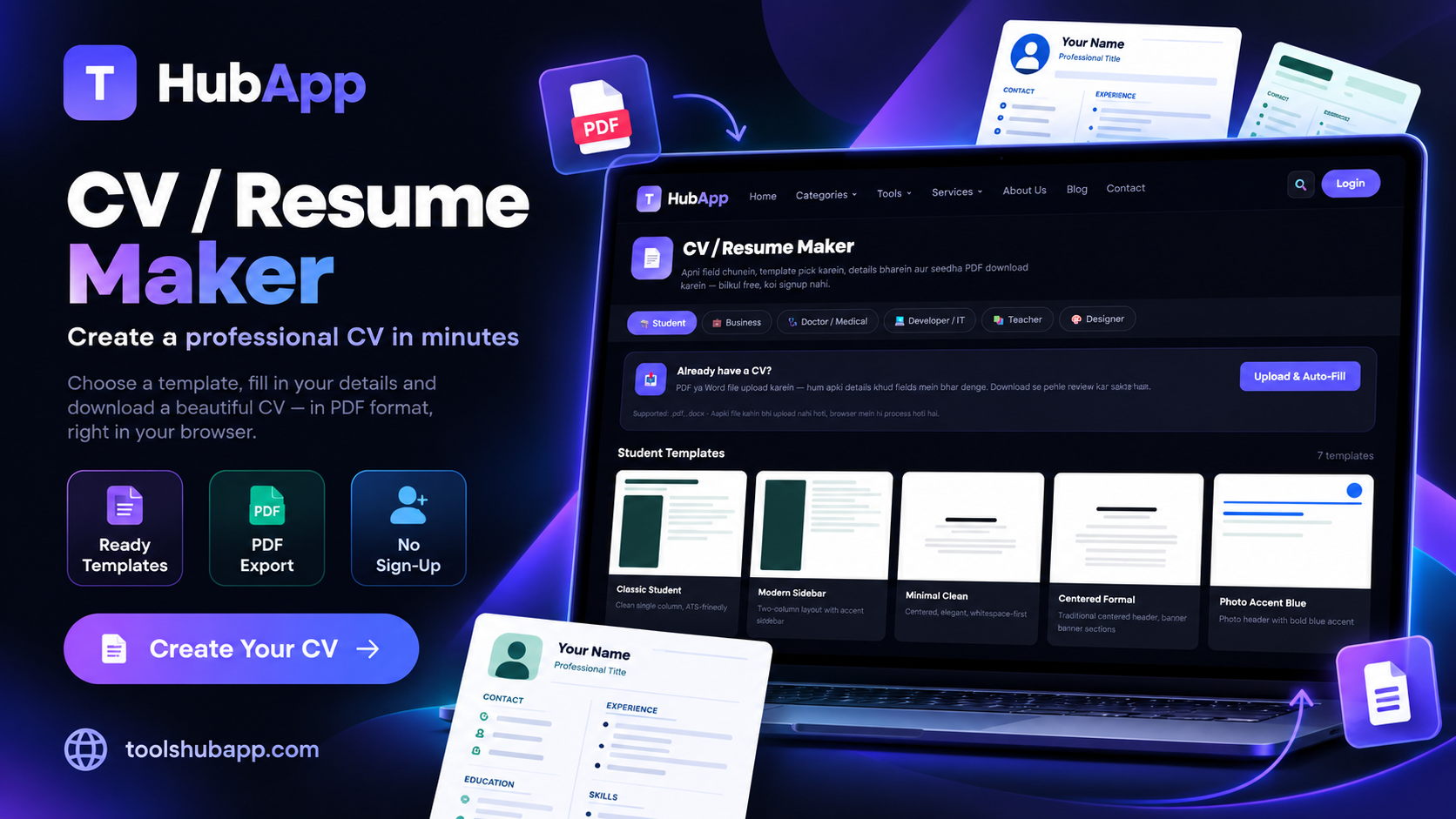
The CV / Resume Maker gives you a clean, ATS-friendly structure to fill in directly — no fighting with margins and fonts in a word processor.
The Single Biggest Mistake: Listing Duties Instead of Results
"Responsible for managing social media accounts" tells a recruiter almost nothing. "Grew Instagram following from 2K to 15K in 8 months through a consistent content calendar" tells them exactly what you're capable of. Wherever possible, rewrite duty-based bullets into result-based ones — even rough numbers ("reduced", "increased", "managed a team of") make a bullet far more convincing.
Making It Past the ATS
- Mirror the job posting's language. If the posting says "project management," don't only write "led initiatives" — many ATS systems match on exact keywords.
- Avoid tables, columns, and graphics for critical info. Some ATS parsers read poorly-formatted layouts incorrectly, scrambling your work history.
- Save as a standard format (PDF that preserves selectable text, not a scanned image) unless the posting specifies otherwise.
FAQ
How long should a CV be?
One page for early-career, up to two pages for 10+ years of experience — beyond that, prioritize relevance over completeness.
Should I include a photo?
Depends on the country and industry — common in parts of Europe and Asia, generally avoided in the US and UK due to anti-discrimination hiring norms.
Do I need a different CV for every job?
Not a full rewrite, but tailoring the summary, skills section, and keyword choices to each specific posting meaningfully improves shortlist odds.